
For the young Virtuos, partnerships were never intended to exist merely on paper.
The philosophy was simple:
If we represent a technology, we must know it deeply.
On 7 April 2008, teams at the Virtuos New Delhi headquarters underwent focused training on the newly released Maximizer CRM 10, strengthening capabilities across its Sales, Customer Service and Marketing modules.
It was another small but important chapter in the company's formative months—one that reflected an early commitment to continuous learning, technical depth and customer-ready expertise.
From CRM 9 Experience to CRM 10 Expertise
Virtuos was not approaching Maximizer CRM 10 as a completely new platform.
The team had already accumulated practical implementation experience with Maximizer CRM Version 9, including the delivery of a significant enterprise CRM environment for GE Healthcare in India.
That implementation experience was now being complemented by structured learning around Version 10 through technical documentation, online learning and internal knowledge development.
The objective was straightforward:
- Learn the new capabilities.
- Understand what had changed.
- Translate features into customer outcomes.
- Be ready to deploy them in real-world environments.
The team's progress and product knowledge also drew positive attention from Maximizer's leadership.
Inside the Training
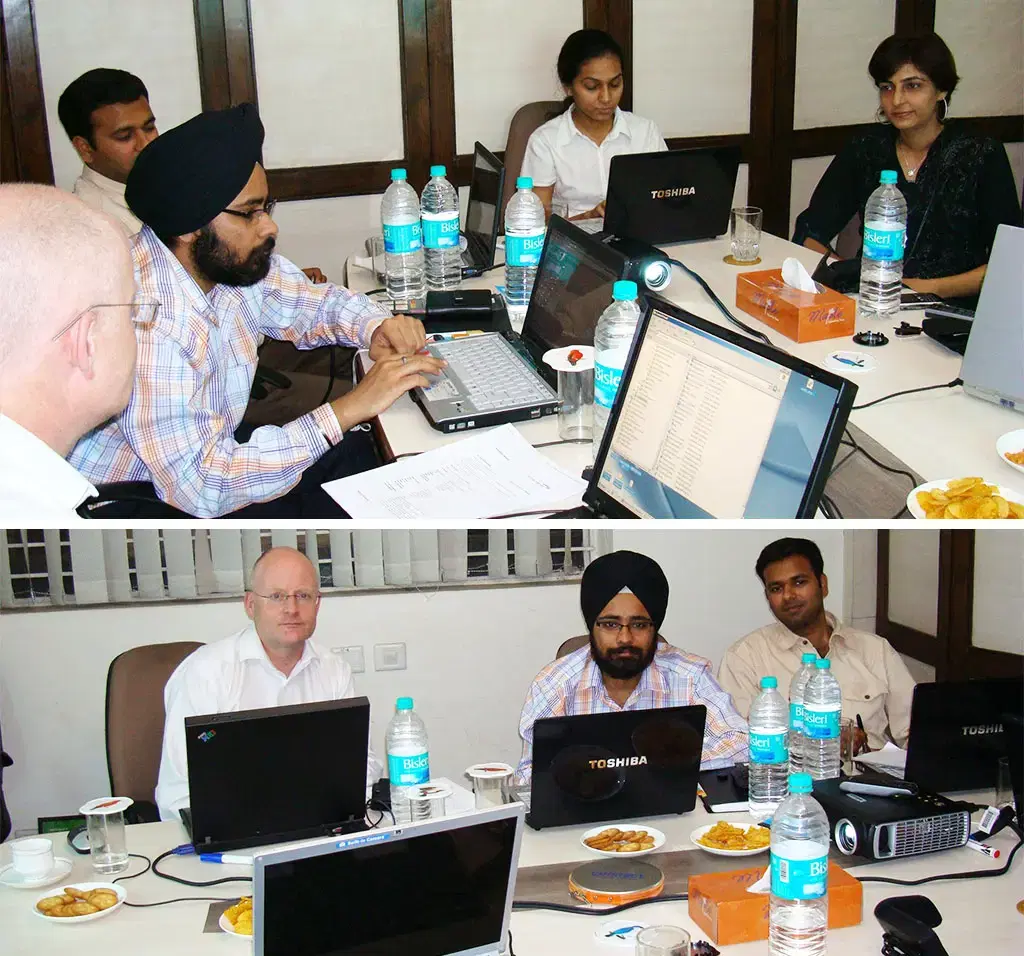
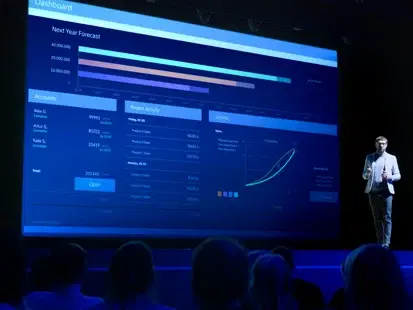
The training covered the major functional pillars of CRM:
Sales
Managing accounts, contacts, opportunities, activities, pipelines and customer information.
Customer Service
Creating a more complete view of customer relationships and supporting more consistent customer interactions.
Marketing
Using centralized customer information, shared content and CRM processes to support more coordinated marketing activity.
But Maximizer CRM 10 was also introducing capabilities that pointed toward a more integrated digital workplace.
CRM Was Becoming the Employee's Workday
One of the interesting capabilities in CRM 10 was My Work Day.
Rather than requiring employees to move constantly between disconnected tools, the CRM environment could surface current and overdue appointments alongside priority tasks.
It reflected an idea that was becoming increasingly important:
CRM shouldn't simply store customer records. It should become part of how employees organize their working day around customers.
Other capabilities included a centralized Company Library for sales and marketing information and corporate collateral, user-defined fields for adapting CRM to specific business requirements, document management associated with customers and opportunities, and OrderDesk for managing customer orders and enquiries.
Together, these features extended CRM beyond contact management toward a more integrated business environment.
The Customer Relationship Lifecycle
For Venky Vijay Reddi, CEO of Virtuos, the importance of CRM came partly from lessons learned before Virtuos was established.
He reflected at the time that companies relying primarily on tools such as Microsoft Word, Excel and Outlook could leave employees without a consistent system for managing customer relationships and expectations.
His argument went considerably further than sales automation:
“CRM is not just about managing Sales, Service or Marketing. It is about managing the entire customer relationship lifecycle.”
That philosophy would become an important part of Virtuos' approach.
Customer relationships don't begin and end with an opportunity in a sales pipeline.
They span:
- Prospecting
- Sales
- Orders
- Service
- Engagement
- Retention
- Growth
CRM needed to connect that lifecycle.
Two Steps Toward the Cloud
Another important aspect of Maximizer CRM 10 was its increasing orientation toward integration and Cloud migration.
The platform offered expanded integration capabilities together with what Maximizer positioned as a simplified two-step migration to the Cloud.
This was particularly relevant to Virtuos.
From its earliest days, the company had described itself as “born in the cloud” and was actively exploring how enterprise CRM would evolve beyond traditional on-premise software.
In 2008, that transition was still at an early stage.
Cloud CRM was not yet the enterprise default.
Virtuos nevertheless saw the direction clearly:
- Applications would become more accessible.
- Customer information would become more connected.
- Deployment would become more flexible.
- CRM would increasingly move toward the Cloud.
CRM for the Entrepreneur
Maximizer was also extending CRM beyond larger enterprises.
The introduction of an Entrepreneur Edition was designed to encourage smaller businesses and entrepreneurs to adopt structured customer-management practices much earlier in their growth.
That idea aligned naturally with Virtuos' thinking.
A company shouldn't wait until it becomes large before understanding its customers systematically.
Customer centricity should begin when the business begins.
For a startup, CRM could establish disciplined customer practices from day one rather than attempting to reconstruct them after years of growth.
Learning Backed by Real Implementation Experience
Training becomes much more valuable when people can connect new functionality with problems they have already encountered in the field.
Virtuos had that advantage.
Its team had already delivered a Maximizer Integrated CRM platform for GE Healthcare, supporting a large B2B customer environment in India.
The solution connected CRM with business processes and operational systems, helping sales and service teams manage customer relationships more systematically.
The implementation had given Virtuos consultants practical experience in:
- CRM configuration
- Sales and service processes
- Enterprise integration
- Data and customer information
- User adoption
- Business process automation
With CRM 10 training, that accumulated implementation knowledge could now be extended into the next generation of the Maximizer platform.
Building Capability Before Building Scale
Virtuos was still a very young organization.
That makes this particular archive story significant.
The company wasn't only pursuing customers and partnerships during its first few months.
It was simultaneously investing in its people.
Jan 2008
Virtuos incorporated.
Feb 2008
Maximizer partnership formally announced.
GE Healthcare
Enterprise implementation provides hands-on Maximizer experience.
7 Apr 2008
Virtuos teams undertake Maximizer CRM 10 training.
Sales + Service + Marketing
The company expands its functional and technical CRM capabilities.
This became an important principle:
Expertise before scale.
A consulting organization ultimately sells the knowledge, judgement and capability of its people.
- Technology changes.
- Versions change.
- Platforms change.
The ability to keep learning cannot.
From the Archives
April 2008 — Creating a Learning Culture
This announcement may appear modest compared with a major customer win or strategic alliance.
Historically, however, it captures something important about how Virtuos intended to build itself.
- Invest in people.
- Learn the technologies deeply.
- Connect product knowledge with customer problems.
- Turn individual expertise into organizational capability.
And keep learning as technology evolves.
The platforms used by Virtuos would change many times over the years.
The principle wouldn't.
Technology expertise has a shelf life.
A culture of learning doesn't.